Week 2: The concept of culture and the two anthropologies
ANTH 1002: Anthropology for a better world (Semester 2, 2026)
August 11, 2026
Contemporary anthropology stresses that each society has a unique worldview which makes sense on its own terms.
Main reading: Eriksen (2015b); Eriksen (2015a)
Other reading: Pierpont (2004)
Slides available at https://anthrograph.rschram.org/1002/2026/02
From 30,000 feet
Figure 1. Asaʻilaʻila and Dawatai villages, on the southern coast of Duau (Normanby Island, off the eastern tip of Papua New Guinea). Because this stretch of coastline is known for its picturesque quality and calm surf, residents call it “Ela Beach,” only somewhat in jest, after the recreational beach near downtown Port Moresby, the capital city.
Alternative description: A satellite image of the curved coastline of an island, with patches of vegetation of different thickness and deep green colors, as well as brown patches of earth, and cleared areas around small structures toward the water.
Party people
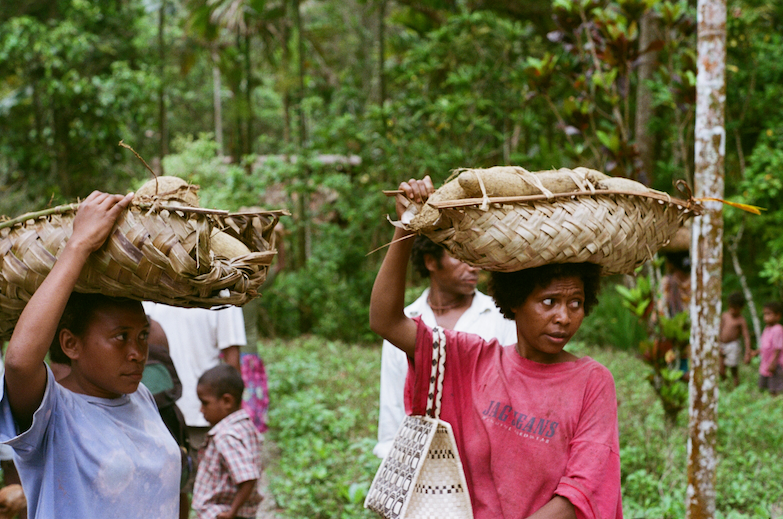
Thunder only happens when its raining
Davo’s dream
- An unsettling dream is not just a personal experience. For Davo, it was important to take responsibility for the content of his dream because it could affect other people.
The feeling of liget for Ilongot men
- Liget is excitement and a feeling of energy, similar to closing in on prey when hunting for animals (Rosaldo 1980, 49).
Even things that seem very basic can actually be very specific to a time and place, and not normal or universal.
Many people dismiss these differences, and attribute them to lack of knowledge. Anthropology, however, says that there is no such thing as normal. These are not errors in thinking.
Innate and acquired
Two opposed ideas about human difference
In many ways, this society is still stuck in the same debate from centuries ago about how to interpret human diversity.
- On one side, humanity is a spectrum. People are
different, so they are unequally human.
- Aristotle: Greeks are natural rulers, everyone else is a barbarian and should be enslaved (Lévi-Strauss 1952, 11)
- On the other side, people are fundamentally the
same in spite of differences
- Bartholome de las Casas: The Indians of the New World may be different, but they have souls, and they have natural rights like Europeans (Anthony 2015)
Two ideas of the human, two anthropologies
One anthropology examines human life as a branch of natural sciences, and investigates human differences like the study of animal species.
- Human differences are differences in type or kind. They go all the way down. They are innate and given at birth.
- Differences among humans are objective, physical differences. Differences in people’s ways of life are explained as the result of these physical differences.
The other anthropology, our anthropology, adheres to the thesis of the psychic unity of humankind.
- Everyone has the same kind of brain. Hence, any person has the capacity to acquire any way of life as a pattern. Any person can learn any culture.
- An important part of the fundamentally similar human brain is that it is plastic, or changeable. Human brains are characterized by extreme neuroplasticity. You literally do not have the same brain as when you were born. When people acquire a way of life as a pattern, their brain changes.
Edward Burnett Tylor: Culture is acquired
For Tylor, the most important differences are learned (acquired) and not innate:
Culture or Civilization, taken in its wide ethnographic sense, is that complex whole which includes knowledge, belief, art, morals, law, custom, and any other capabilities and habits acquired by man as a member of society. The condition of culture among the various societies of mankind, in so far as it is capable of being investigated on general principles, is a subject apt for the study of laws of human thought and action. (Tylor [1871] 1920, 1:1)
The evolutionary approach to culture challenged racism, but somewhat imperfectly
Importantly, Tylor’s response to pseudoscientific racism still allowed room for another kind of objective scale of measurement
- The opposition of primitive and civilized cultures is another kind of spectrum of humanity, even if it posits that culture is acquired.
- Tylor’s ideas represent another kind of ethnocentrism. He and his own society is the standard against which he measures other people.
- People are different, but for Tylor, culture is singular. He never speaks of cultures in the plural (Stocking 1982), except in one very late writing (Price 2012, sect. 4.4).
Cultures in the plural
Franz Boas is responsible for creating a properly cultural anthropology in which difference can be explained with a new idea of culture in which there are many cultures in the plural, and culture is not a scale.
Franz Boas: There are many ways to be human
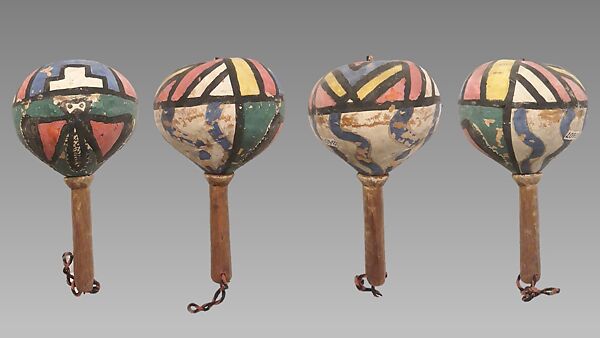
- Boas’s scientific research led him to become interested in documenting Native North American ways of life, and later to communicating this through museums.
- He was a critic of his contemporaries, who like Tylor, were interested in using evidence of human difference to tell a single story of humanity.
- Boas argued that these kinds of explanations are false because they select single traits, like a single tool, and take them out of the context in which people practice them or use them.
Franz Boas: Culture is an integrated worldview, and so anthropology must be holistic
Every attempt to deduce cultural forms from a single cause is doomed to failure, for the various expressions of culture are closely interrelated and one cannot be altered without having an effect upon all the others. Culture is integrated.
Boas ([1932] 1940, 256)
[T]he art and characteristic style of a people can only be understood by studying its productions as a whole.
Boas (1887a) as quoted in Stocking (1988, 79)
[T]he main object of ethnological collections should be the dissemination of the fact that civilization is not something absolute, but that it is relative, and that our ideas and conceptions are true only so far as our civilization goes.
Boas (1887b) as quoted in Stocking (1988, 79)
Franz Boas: Because each culture is a whole, its parts only make sense in terms of the whole
[T]he activities of the human mind exhibit an infinite variety of form among the peoples of the world. In order to understand these clearly, the student must endeavor to divest himself entirely of opinions and emotions based upon the peculiar social environment into which he is born. He must adapt his own mind, so far as feasible, to that of the people whom he is studying. The more successful he is in freeing himself from the bias based on the group of ideas that constitute the civilization in which he lives, the more successful he will be in interpreting the beliefs and actions of man. He must follow lines of thought that are new to him. He must participate in new emotions, and understand how, under unwonted conditions, both lead to actions. (Boas 1911, 98)
[T]he differences between civilized man and primitive man are in many cases more apparent than real. (Boas 1911, 114)
- Outside observers are always ethnocentric. They assume that someone else’s difference indicates a lack.
- In this essay, Boas cites several examples in which it is actually
the outside observer who lacks something normal in the eyes of the
people observed.
- To the people being observed, it is the observer who is “primitive” because they are civilized—by their own standards.
- The solution for the anthropologist is to always treat a particular culture as a product of its own “inner development” which cannot be judged by an outsider’s ethnocentric standard (Boas [1920] 1940, 286). This is the doctrine of cultural relativism.
What culture is not
It is common to hear about cultures in the plural. The concept of multiculturalism would not be possible without it.
Yet ethnocentric perspectives on cultural difference are still prevalent even when, over 100 years later, people sound more like Boas that Tylor.
- Culture is not just people’s identity
- Culture is usually implicit and invisible, like a habit, not obvious or deliberate expression
- One’s culture is not just what makes people different from each other. Everyone needs to acquire patterns from a shared culture to be complete.
Culture is acquired, but for those who acquire one cultural pattern from their community, it feels like it is natural and normal. Culture is like a second nature.
Notes for tutorial
Modern anthropology introduced the idea that the world was made up of people from many different cultures, and that each culture made sense on its own terms, and that no culture was better or more sophisticated than any other culture.
Anthropologists were not the first to puzzle over human diversity. It has been something that many people in many different intellectual traditions have sought to explain for centuries. Some of them were philosophers, some where theologians, some were historians, and some were natural scientists—and some of them even said they were anthropologists.
But they weren’t—not like us. There have always been two anthropologies.
- One kind of anthropology says that people are more or less human. If someone is different it is because they are not fully human.
- Another kind of anthropology fought back against this, and said that everyone person had the same claim to being human but expressed it differently. Just because they were different did not mean that they were inferior.
The second kind of anthropology fought against the first and eventually this fight led to the creation of the kind of anthropology we study in this class. Modern anthropology starts with two ideas
- Any person can learn any culture. Everyone has the same basic psychology.
- Instead of thinking of differences in linear terms, or how culture-d a group is, cultures are plural. People belong to many different culture-s
There were several different thinkers who contributed a part of to this idea of cultures in the plural. We will talk about two, Edward Tylor and Franz Boas, and we will talk a lot about how Boas’s concept of culture and his maxim of cultural relativism created anthropology as we know it.
Possible activities for tutorial
- Discuss how you can work together with your peers to make sure everyone benefits from going to tutorial each week.
- What are your best and worst experiences in tutorial discussions?
- What should teachers promise students?
- What should students promise each other?
- What should students promise teachers?
- What are some ways to make sure everyone has a chance to participate?
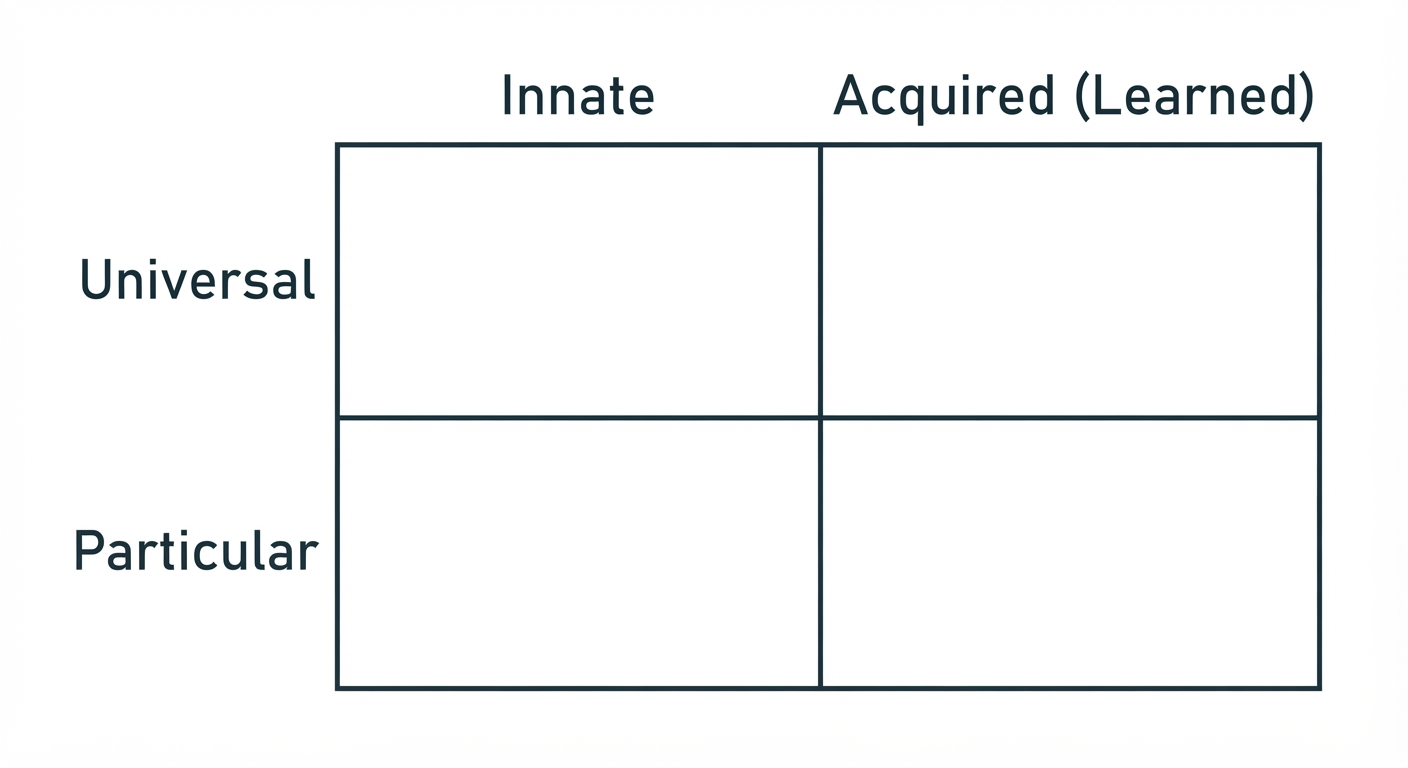
Look at this two-by-two grid, which draws from Eriksen (2015b).
Traits can fall into one of two columns, either innate (left) or acquired, meaning learned (right), and one of two rows, either universal (top) or particular (bottom). [Image created by gen AI.]
- For each quadrant, generate some examples of a behavior or trait that belongs there.
- Which were easy and which were hard?
- Which ones were controversial? Why?
Imagine a baby born in one country (e.g. Finland, Turkey, Tunisia) is adopted at birth and raised by parents who were born in and live in another country (e.g. Singapore, Slovakia, Egypt). The adoptive parents have other children whom they have raised since birth. In your opinion, what would be the important differences and similarities between the adopted child and its biological siblings raised by its birth parents once they have all grown to adulthood?
Keywords
culture, Franz Boas, Edward Tylor, ethnocentrism, relativism
Learning outcomes
- Understand the obligations of students to each other and their teachers, and the teachers’ obligations to the students
- Understand the origins of the concept of culture, and the importance of the shift from singular culture to plural cultures
- Understand the Boasian concept of culture and its relationship to a principle of relativism